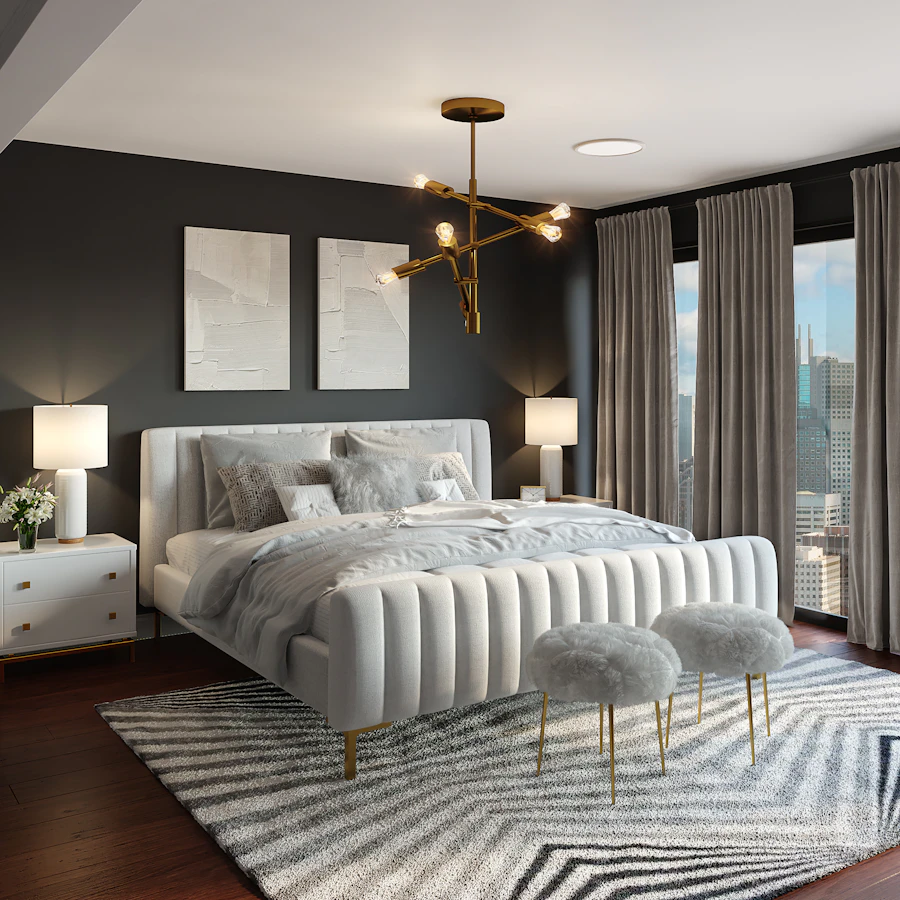


Most people arrive with a folder of saved images, and I look at every one of them. But a collection of rooms you admire tells me what you like the look of, not how you want to live. Those are different briefs, and only one of them produces a home that works.
So I ask six questions instead.
1. Where in your current home do you actually sit?
Not where the seating is. Where you end up. The answer is almost never the formal living room, and it tells me immediately which room deserves the budget.
2. What is the first thing you do when you come home?
This decides the entry sequence: whether you need a bench, where the keys land, how much storage has to sit within three steps of the door. Get it wrong and the hall becomes a dumping ground within a month.
3. How often do you have people over, and how many?
Six people twice a month is a completely different plan from forty people twice a year. Both are fine. Designing for the gathering you imagine rather than the one you actually host is the most common and most expensive mistake I see.
4. What do you own that has to stay?
A grandmother's almirah, a piano, a rug from a trip. These anchor a scheme far more usefully than any saved image, and discovering them in month four is painful for everyone.
5. What do you dislike in other people's homes?
Far easier to answer honestly than what you like, and much more diagnostic. Dislikes tend to be specific and personal; aspirations tend to be borrowed.
6. What is the number you do not want to exceed?
The single most useful sentence in any first meeting. A designer who knows the ceiling can design to it. A designer who is guessing will show you something beautiful you cannot build, and you will both have wasted a month.
Answer those six honestly and the mood board becomes a useful supplement rather than the whole brief. That is the right order.
Process · 9 March 2026
Discuss a Project